
St FrideswidePrimary School
Nurture Network
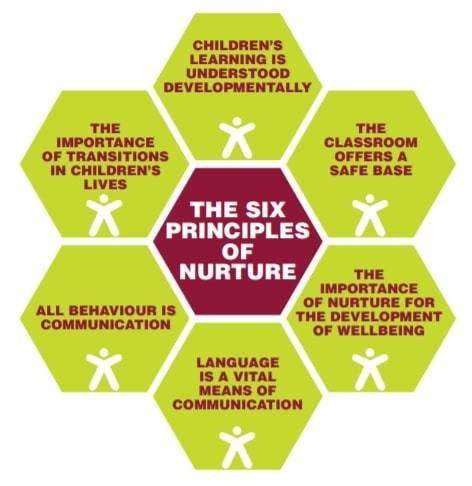
Everything we do has been based on and guided by the six principles of nurture that have successfully underpinned nurturing approaches for over 50 years. We are accredited by the National Nurturing Schools Programme.
Teachers are trained to focus on emotional needs and development as well as the academic learning of all pupils, and to embed the six principles of nurture throughout the policies and practices of a school.
Children's learning is understood developmentally
Staff respond to children not in terms of arbitrary expectations about ‘attainment levels' but in terms of the children's developmental progress assessed through the Boxall Profile Handbook. The response to the individual child is ‘as they are', underpinned by a non-judgemental and accepting attitude.
The classroom offers a safe base
Classrooms are organised around a structured period of time with predictable routines. Great attention is paid to detail; the adults are reliable and consistent in their approach to the children.
Nurture is important for the development of self-esteem
Nurture involves listening and responding. Children respond to being valued and thought about as individuals, so in practice this involves noticing and praising small achievements.
Language is understood as a vital means of communication
Language is more than a skill to be learnt, it is the way of putting feelings into words. We take every opportunity to listen and respond to support individuals.
All behaviour is communication
This principle underlies the adult response to the children's often challenging or difficult behaviour.
‘Given what I know about this child and their development what is this child trying to tell me?'
Understanding what a child is communicating through behaviour helps staff to respond in a firm but non-punitive way by not being provoked or discouraged. If the child can sense that their feelings are understood this can help to diffuse difficult situations. The adult makes the link between the external / internal worlds of the child.
Transitions are significant in the lives of children
On a daily basis there are numerous transitions the child makes, e.g. between sessions and classes and between different adults. Changes in routine can be difficult and need to be carefully managed with preparation and support.